 Banff City Guide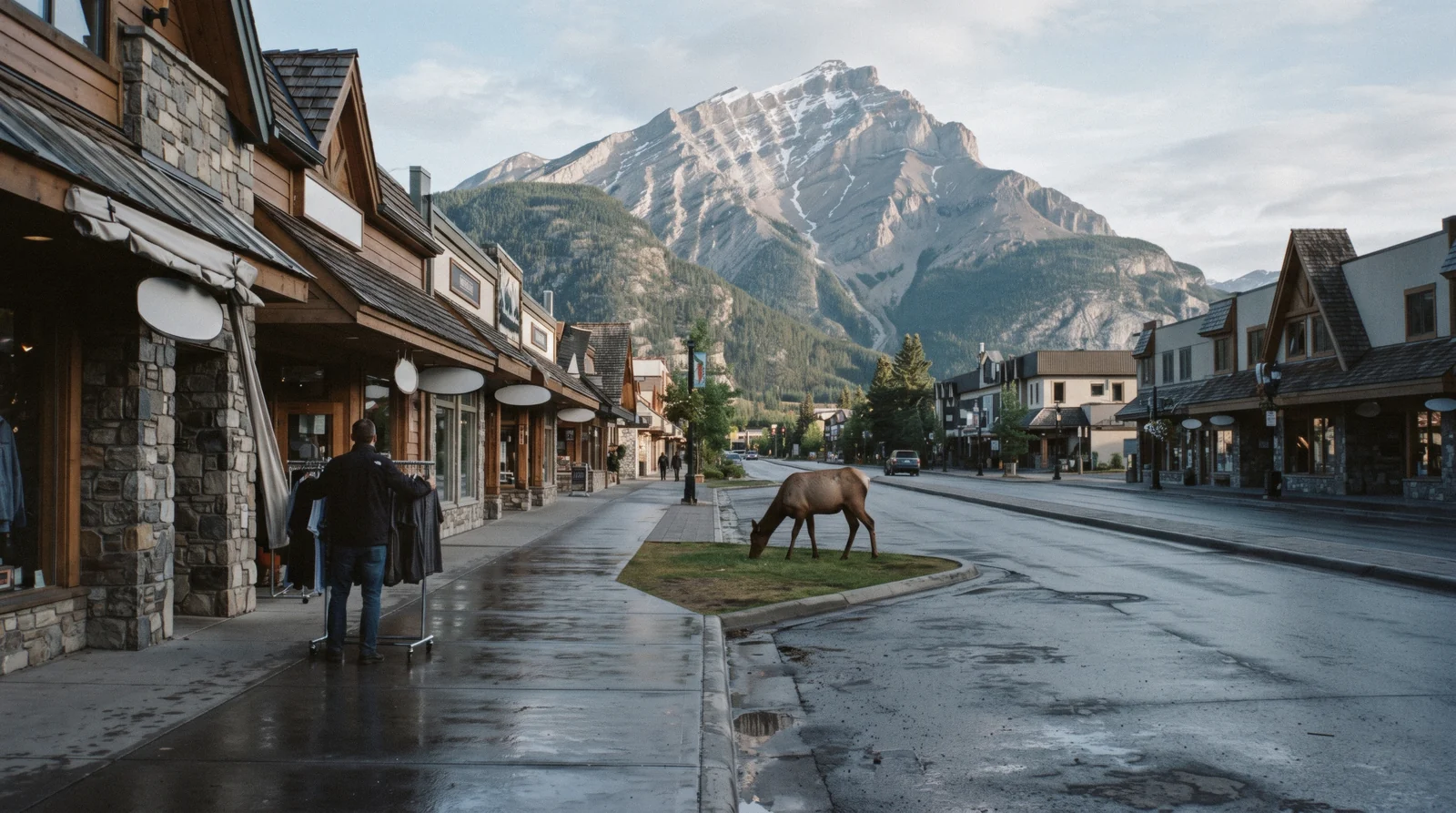
Wildlife in Banff: Elk, Bears, and the Rules
Banff wildlife is close, easy to find and strictly ruled. This page covers the animals you will actually see, where they show up, the distance laws, and the seasons that change everything, with links to our things to do in Banff planning hub. The whole valley, start to finish: the Banff homepage.
Quick answer The short version on Banff wildlife
You will almost certainly see elk, likely deer, and possibly bears, wolves, coyotes and mountain goats. The law is simple. Keep 30 metres from elk and deer and 100 metres from bears, wolves, cougars and coyotes. Fines for wildlife offences reach $17.74 (C$25),000. Elk are a town fixture in Banff, especially during the rut from late August to mid-October and calving from mid-May to early July. Carry bear spray year-round on trails. If you want a guide who knows the meadows, the Banff Highlights and Wildlife Small-Group Tour loops the best animal country in about three hours.
Key takeaways
- Distances are the core rule: 30 m from elk and deer, 100 m from bears, wolves, cougars and coyotes, per the town wildlife page and Parks Canada.
- Park entry is not free. The daily pass is $8.69 (C$12.25) per adult, and youth 17 and under enter free. Full details on our park pass page.
- Elk rut runs late August to mid-October and calving runs mid-May to early July. Both change elk behaviour in town.
- A guide shortcut: the Banff Highlights and Wildlife Small-Group Tour covers Minnewanka, Two Jack and the Springs area with a naturalist eye.
The Species and Where They Actually Appear
Not every park animal is equally likely. The table below compares the species visitors realistically encounter, where each one tends to show up, and the distance rule that applies. The distances come from Parks Canada and the Town of Banff wildlife pages. Sightings are our estimate based on how the valley works, not a guarantee.
Likelihood, Habitat and the Law
Elk are the near certainty. They graze lawns, school fields and golf course edges inside the townsite, and they crowd the Bow Valley in every season. Deer are common at dawn around quiet streets and the Vermilion Lakes flats.
Black bears appear along road edges and berry slopes from spring to fall. Grizzly bears are rarer and usually spotted at distance in the higher meadows and around the Lake Louise side. Wolves and cougars live in the valley but most visitors never see one.
Coyotes are regular on open flats. Mountain goats favour steep rock, and the Lake Minnewanka road area is one place people reliably report them. What matters more than the species list is the distance column, because that is the law you will be judged by.
| Animal | Where you actually see them | Distance rule | Our estimate of odds |
|---|---|---|---|
| Elk | Town lawns, Banff Avenue edges, golf course, Two Jack and Minnewanka roads | 30 m (3 bus lengths) | Near certain |
| Mule and white-tailed deer | Quiet streets at dawn, Vermilion Lakes flats | 30 m | Very likely |
| Black bears | Roadside berry slopes, canyon trails in fall | 100 m | Possible in summer and fall |
| Grizzly bears | High meadows, Lake Louise side, Lake Louise Ski Resort sightseeing gondola slopes | 100 m | Uncommon, usually far off |
| Coyotes | Open flats, Vermilion Lakes, town edges | 100 m | Regular |
| Wolves | Valley floor, Minnewanka area | 100 m (10 bus lengths) | Rare |
| Cougars | Forest edges, dawn and dusk | 100 m | Rare |
| Mountain goats | Cliffs along the Minnewanka road, high rock | Not stated | Likely from a distance |
What the Official Pages Do and Do Not Publish
Parks Canada prints the 30 m elk recommendation and the 100 m wolf and cougar rule in plain text, and the Town of Banff applies 30 m to elk and deer and 100 m to bears, wolves, cougars and coyotes. A separate printed legal bear distance is not stated on the pages we checked, so treat 100 m as the working standard for every large carnivore. Population counts for the Bow Valley are not stated on those pages either.
If you need current sighting reports, ask at the Banff Visitor Centre at 224 Banff Avenue, open 9 am to 5 pm daily.
Distance rules and behaviour notes from Parks Canada wildlife safety and the Town of Banff wildlife habitat page.
Elk: The Town Commute
Elk are the reason banff wildlife feels unusual. They walk down Banff Avenue, sleep on the school field and block the bridge at rush hour. This section covers their calendar, their moods and what the town actually does about them.
The Calendar That Changes Their Behaviour
Two windows matter. The rut runs from late August to mid-October, when bull elk collect cows and become aggressive. The Town of Banff warns to keep at least 30 metres away and never to get between a male and the females.
Calving runs mid-May to early July, when cows defend their young and will strike if they feel threatened. Outside those windows elk are usually calm grazers, which is exactly why people forget the rules and walk up for a photo. Inside those windows the animals are a different story.
How the Town Adapts
Banff is a town of about 8,000 people inside a national park, and elk have right of way. During the annual fall rut, swings are removed from Town playgrounds to reduce the danger of elk becoming entangled. That single detail tells you how seriously the town treats the season.
Report elk in town and any large carnivore sighting to Parks Canada dispatch at 403-762-1470.
If an Elk Comes at You
The official advice is specific and worth memorising. Travel in a group. Detour around elk.
Stay back at least 30 metres. If one acts aggressively, act dominant: raise your arms, make yourself large, keep eye contact, and never turn your back or run. If you are knocked down or fall, get up and move to cover.
Do not play dead. That last line is the one people get wrong, because play dead is bear advice, not elk advice.
Rut and calving dates and encounter advice from the Town of Banff elk season page.
Bears: The Facts and the Spray
Bears are the animals everyone asks about. Both black bears and grizzly bears live in the park, and Parks Canada's own instruction is blunt: always carry bear spray, year-round. Here is what that means in practice.
Bear Spray, Specified
The recommended can is 225 ml, about ten seconds of spray, with 0.75 to 1 percent capsaicin. It fires a cone-shaped cloud to roughly 10 m at over 100 km/h, though the official video guidance calls five metres the effective range, so close the distance mentally before you count on the cloud. Carry it in a holster you can reach with your dominant hand.
Having it in your pack is, in Parks Canada's own words, a no-no. Cyclists should place it in the bike's water bottle rack. Check the expiry date before your trip.
Package volume cannot exceed 500 ml, and bear spray is not allowed on a commercial airline, even in checked baggage. Buy it in Banff if you fly in, and give it away or leave it with a local when you fly out.
If You Ever Use It
Bear spray is a last resort. Remove the safety clip, aim for the bear's face, and give quick one-second bursts until the bear retreats. Practise the motion with an inert can before you need it.
Report any bear, cougar, wolf or coyote sighting to Banff Dispatch at 403-762-1470 so rangers can track the animal and warn other hikers. For the wider safety picture, including trail habits and town scams, read our safety page.
Roadside Bears
A bear beside the road draws a crowd fast, and the crowd is the danger, both to the bear and to you. The official instruction is to slow down, stay in your vehicle, take a photo and move on. Never take selfies with wildlife.
Stopping short, edging out into the lane or opening a door to frame a shot is how bear jams become incidents, and wildlife offences can bring fines up to $17.74 (C$25),000 with a mandatory court appearance.
Bear spray specifications and handling from Parks Canada's bear spray page and the Banff wildlife page.
The Highway Fences and Crossings
The Trans-Canada Highway through the park is fenced to keep animals off the pavement, and the fenced sections connect to overpasses and underpasses built for wildlife. What the official pages we checked do not publish is a count of the structures or crossing statistics, so we will not print numbers we cannot verify.
What This Means for Your Drive
Fenced highway means animals funnel to specific crossing points, and it also means the animals you do see are usually on the open side roads rather than the mainline. The Bow Valley Parkway, the Minnewanka Loop and the Vermilion Lakes road are where drivers report most sightings. Fences end where the road networks do, so slow down where the fencing stops.
Report fresh roadkill or an animal on the highway to Banff Dispatch at 403-762-1470.
If You Want the Crossing Story First Hand
There is no official visitor centre exhibit for the crossings in the materials we checked. Guides who drive the valley daily know where the animals move, which is a quiet argument for a guided loop. The Banff Highlights and Wildlife Small-Group Tour runs exactly that circuit with a guide who reads the meadows.
Sources: Banff National Park pages on parks.canada.ca. Structure counts and usage statistics are not stated on the pages checked.
The Ethics and the Law: Distances, Baiting and Your Dog
Banff wildlife law is enforced, and the penalties are not symbolic. This section collects the rules that carry fines, plus the everyday ethics that keep animals wild.
What Carries a Fine
It is illegal to feed, entice or disturb any wildlife in a national park. That covers tossing a chip to a ground squirrel, calling a fox closer for a photo and blocking an animal's path with your car. Wildlife offenders could pay fines up to $17.74 (C$25),000 with a mandatory court appearance, and for serious offences like poaching or pollution fines can exceed $177.40 (C$250),000.
Dogs must be on a leash and under physical control at all times. It is the law, not a suggestion, and an off-leash dog can draw a predator toward your family. Drone rules for the park are not stated on the pages we checked, so confirm with Parks Canada before flying anything.
Food and Garbage
A fed animal becomes a dead animal, and the town makes it easy to do the right thing. Dispose of all unwanted food and garbage in the wildlife-proof garbage bins. Clean your barbecue.
If you live here, remove fruit trees. Visitors should treat every crumb as a attractant: a cooler left open at a picnic site teaches a coyote that picnic sites pay. The Cave and Basin National Historic Site and other busy sites all have the bins, so there is no excuse to carry trash out of habit.
The Ethical Photo
The rule of thumb is that if your presence changed the animal's behaviour, you were too close. A grazing elk that lifts its head and stares at you has already been disturbed. Use the zoom, stay on trails, and never position yourself between a mother and young or a bull and his cows.
Our pick for the best honest wildlife photography in the valley is from a vehicle or a designated viewpoint at dawn, when animals feed and light is good.
Rules and penalties from the Parks Canada rules page and the Town of Banff wildlife habitat page.
When: Dawn, Dusk and the Seasons
Timing beats luck in wildlife watching. Most park mammals feed at first and last light, and the seasons reshape both behaviour and location.
Time of Day
Dawn and dusk are the honest answer. Elk graze town edges in the early morning before the traffic builds. Bears feed along road edges and berry slopes in the cool hours and bed down mid-day.
Mid-day is better spent at the falls or on the gondola, and you can compare the two in our gondola versus hike guide. If you only have one wildlife window, take the hour after sunrise around Vermilion Lakes or the Minnewanka Loop.
Season by Season
Spring means calving, mid-May to early July, with defensive cows around town edges and meadows. Summer puts animals higher and farther from the road, though bears stay visible where berries ripen. The rut from late August to mid-October brings bugling bulls and the town's playground-swing removal.
Fall is also the best bear-on-the-road season as animals pack in calories. Winter concentrates elk near town and makes animal tracks easy to read on snow, and the canyon walks of Johnston Canyon stay open as a self-guided winter trail, usually very icy, with cleats strongly recommended.
| Season | What changes | Where to look |
|---|---|---|
| Mid-May to early July | Elk calving, defensive cows | Town edges, meadows, from a distance |
| Summer | Animals move higher, dawn and dusk best | Minnewanka road, parkway meadows |
| Late August to mid-October | Elk rut, aggressive bulls | Town lawns and fields, 30 m minimum |
| November to April | Elk concentrated near town, tracks on snow | Bow River banks, low trails |
Rut and calving dates from the Town of Banff elk season page. Climate figures are ERA5 1995-2024 normals for Banff.
Guided Wildlife Watching or Going Yourself
Watching animals is free once you hold a park pass, so the only money decision on this page is whether to add a guide. The table compares the official starting points with the main guided option on our platform, with the tour price quoted from its own listing.
Do you want someone else to find the animals, or do you want the freedom to stop where you like?
| Option | Price | Duration | Good for | Book |
|---|---|---|---|---|
| DIY: park pass plus your own driving and walkingIndependent drivers who will follow the distance rules | $8.69 (C$12.25) adult day pass, youth free | Your own clock | Travellers happy to drive the loop roads at dawn themselves | Official site |
| Banff Highlights and Wildlife Small-Group TourVisitors without a car or without the patience for bear jams | $101.18 | 3 hours | First-timers who want a guide reading the meadows | Check Availability |
The day pass covers entry to Banff and seven other national parks until 4 pm the day after purchase. The tour price is the platform listing's own price in US dollars. Figures current for in Q3 2026.
Wildlife Tours Worth a Look
One tour on our platform is built around animals rather than stops. The listing price is the operator's own and loads live at checkout.
 from $101.18
Banff Highlights and Wildlife Small-Group Tour
A half-day loop of the valley's best animal country — Minnewanka, Two Jack, the Springs — with a guide who reads the meadows.
Check AvailabilityPrices, ratings and details are the platform's own. dollar figures are the listed prices — the platform bills in your account's currency.
Do and Do Not Around Banff Wildlife
The short list that keeps you legal and keeps animals wild.
Do
- Keep 30 m from elk and deer and 100 m from bears, wolves, cougars and coyotes
- Carry bear spray in a reachable holster, year-round
- Report carnivore sightings to Banff Dispatch at 403-762-1470
- Use the wildlife-proof bins for every scrap of food and garbage
- Keep dogs on a leash and under physical control at all times
Don't
- Do not feed, entice or disturb any wildlife, it is illegal
- Do not take selfies with wildlife
- Do not play dead in an elk encounter, act dominant instead
- Do not approach newborn elk in calving season
- Do not stop in the travel lane to photograph a roadside bear
Wildlife Watching Map
The places named on this page, from the town lawn elk to the Minnewanka road. Distances between pins are our estimate.
Banff Wildlife Questions
How close can I legally get to elk in Banff?
Parks Canada recommends keeping 30 metres, or three bus lengths, from elk, and the Town of Banff applies the same 30 m rule to elk and deer with 100 m for bears, wolves, cougars and coyotes. In the rut, from late August to mid-October, treat the 30 m as a bare minimum and never get between a bull and the cows.
What are the fines for disturbing wildlife in Banff National Park?
Wildlife offenders could pay fines up to $17.74 (C$25),000 with a mandatory court appearance. For serious offences such as poaching or pollution, fines can exceed $177.40 (C$250),000. Feeding, enticing or disturbing any wildlife in a national park is illegal.
When is elk rut and calving season in Banff?
The rut runs from late August to mid-October and brings aggressive bull elk into the townsite. Calving runs from mid-May to early July, when cows are very defensive of young. The town even removes swings from playgrounds during the rut to prevent entanglement.
Do I really need bear spray in Banff?
Parks Canada says to always carry bear spray year-round. Buy a 225 ml can with 0.75 to 1 percent capsaicin, carry it in a holster you can reach with your dominant hand, and check the expiry date. It is not permitted on commercial flights, even in checked baggage.
What should I do if an elk charges me?
Act dominant: raise your arms, make yourself large, keep eye contact, and never turn your back or run. If you are knocked down, get up and move to cover. Do not play dead. That advice applies to some bear situations, not to elk.
Where is the best place to see wildlife without a guided tour?
Our estimate: the Vermilion Lakes flats at dawn and the Lake Minnewanka and Two Jack Lake loop roads in the early morning and evening. Ask at the Banff Visitor Centre at 224 Banff Avenue for that day's sighting reports, and read our safety page before heading out.
We may earn a commission if you book through one of our links, at no extra cost to you. Full affiliate disclosure